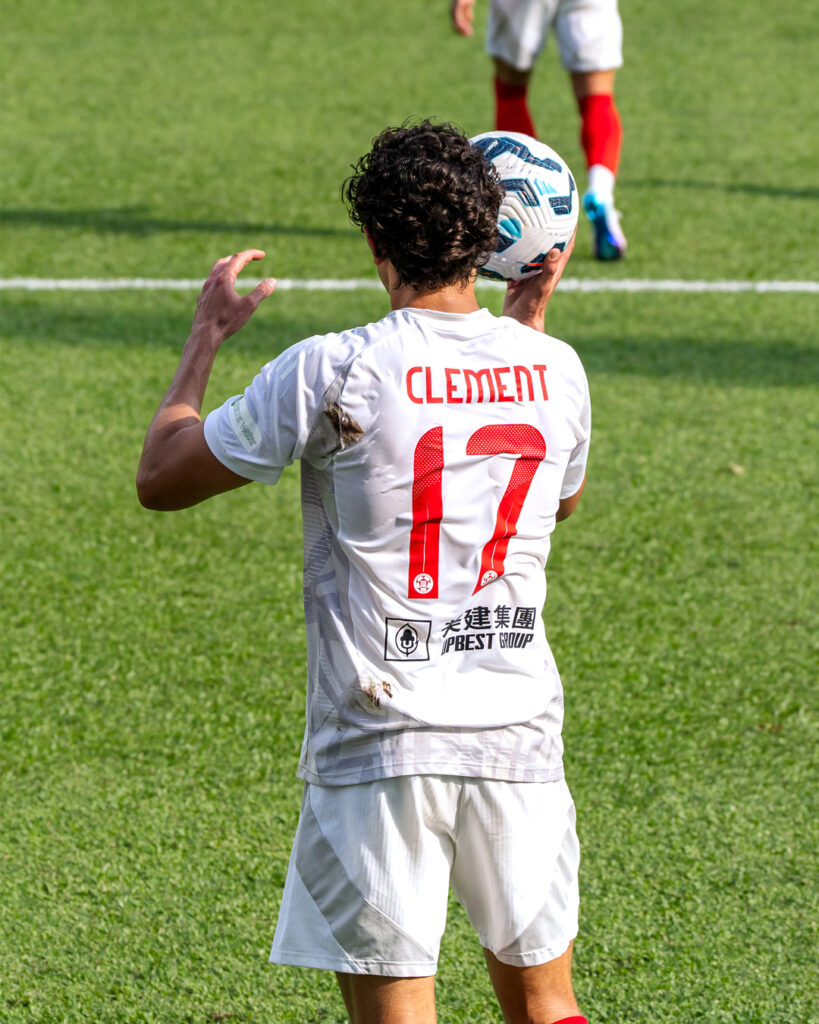
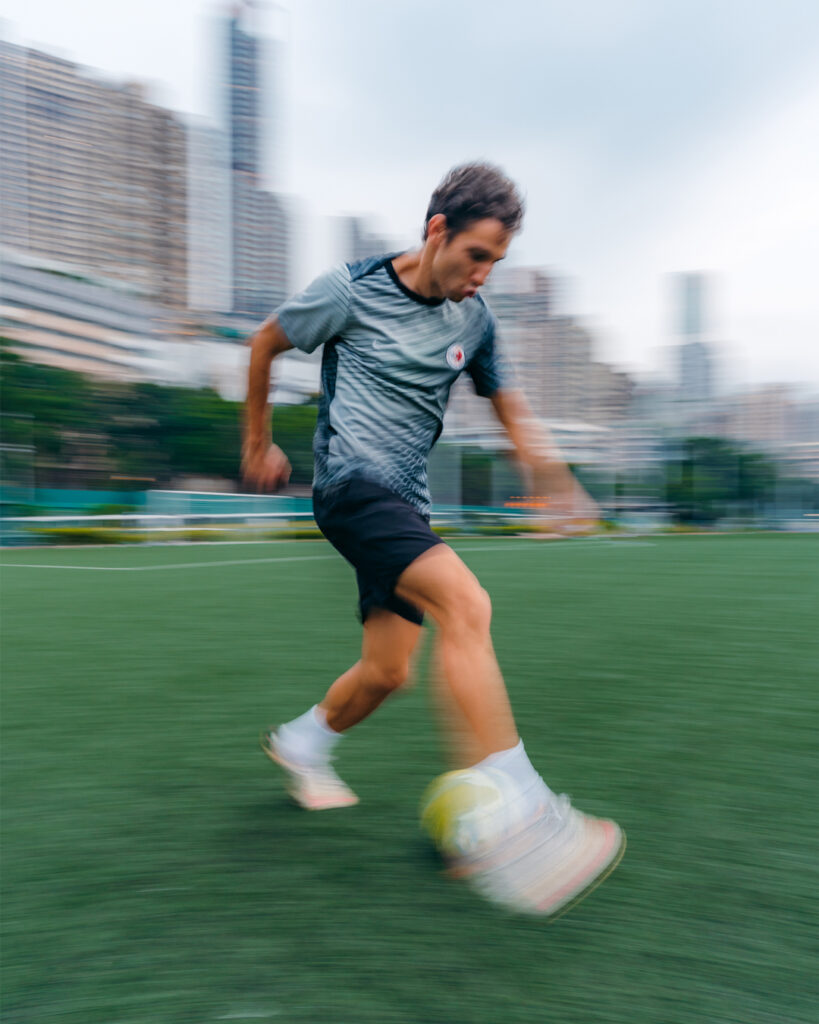
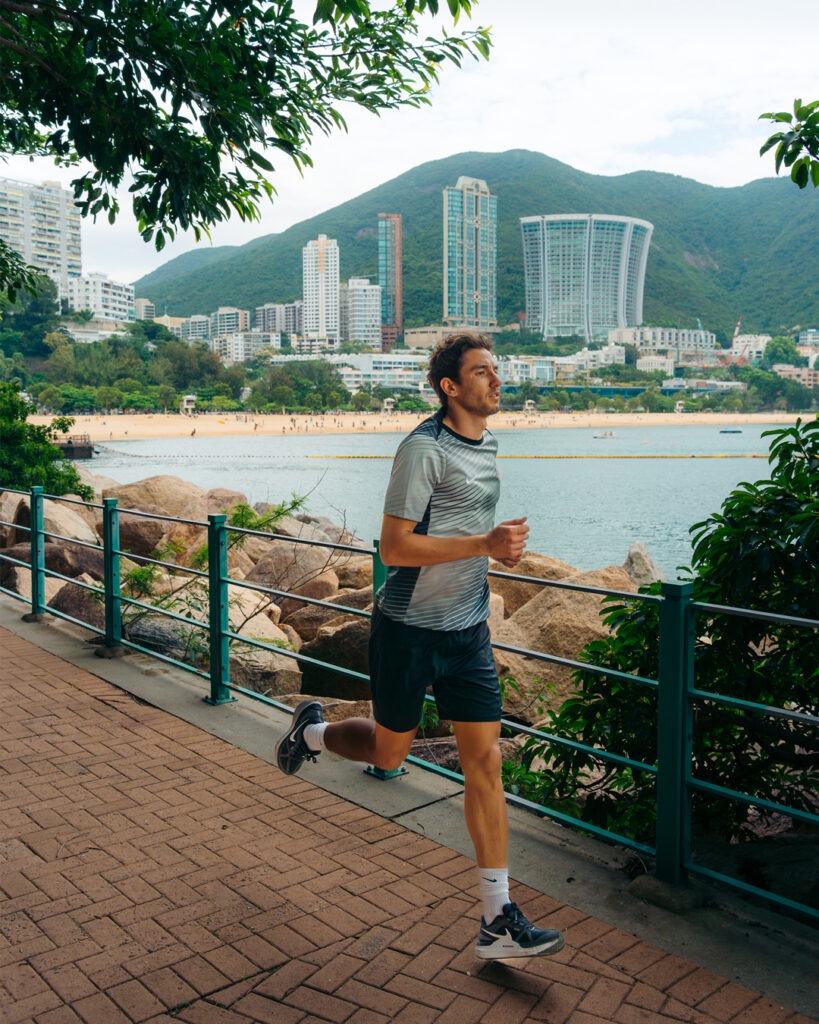
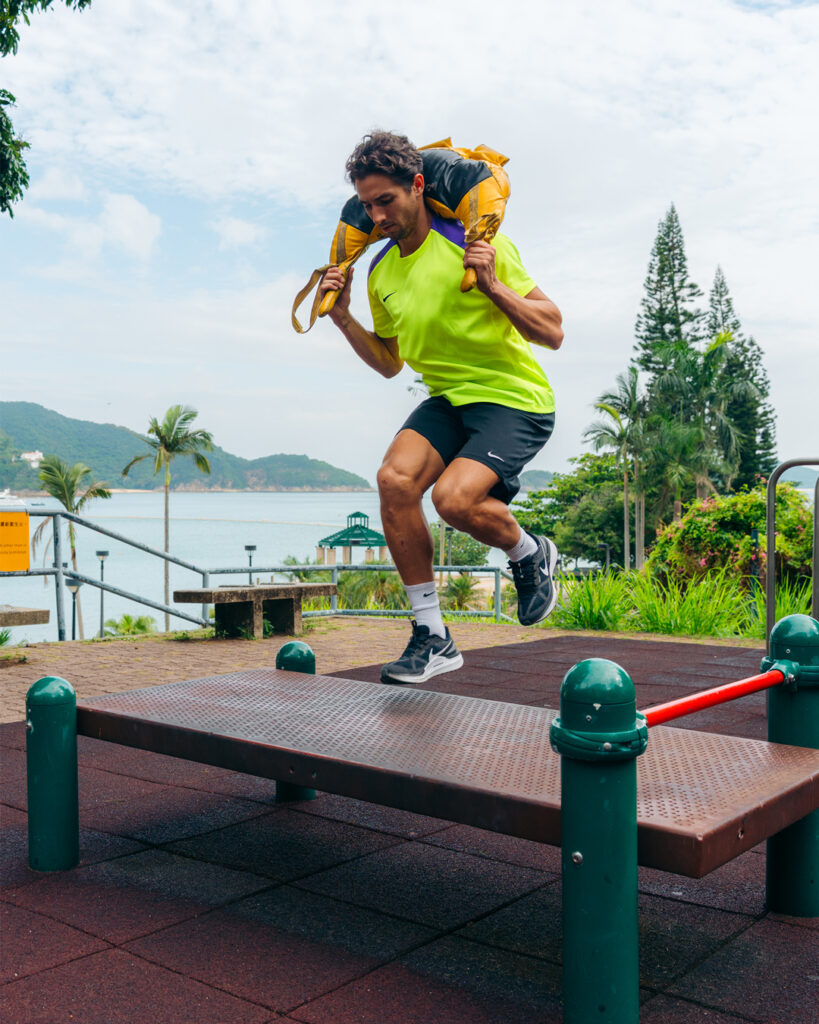
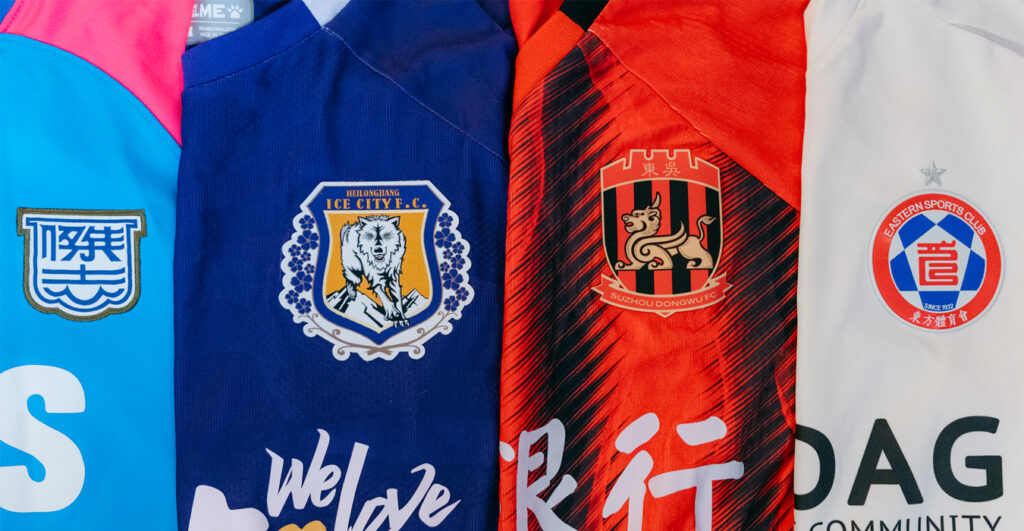
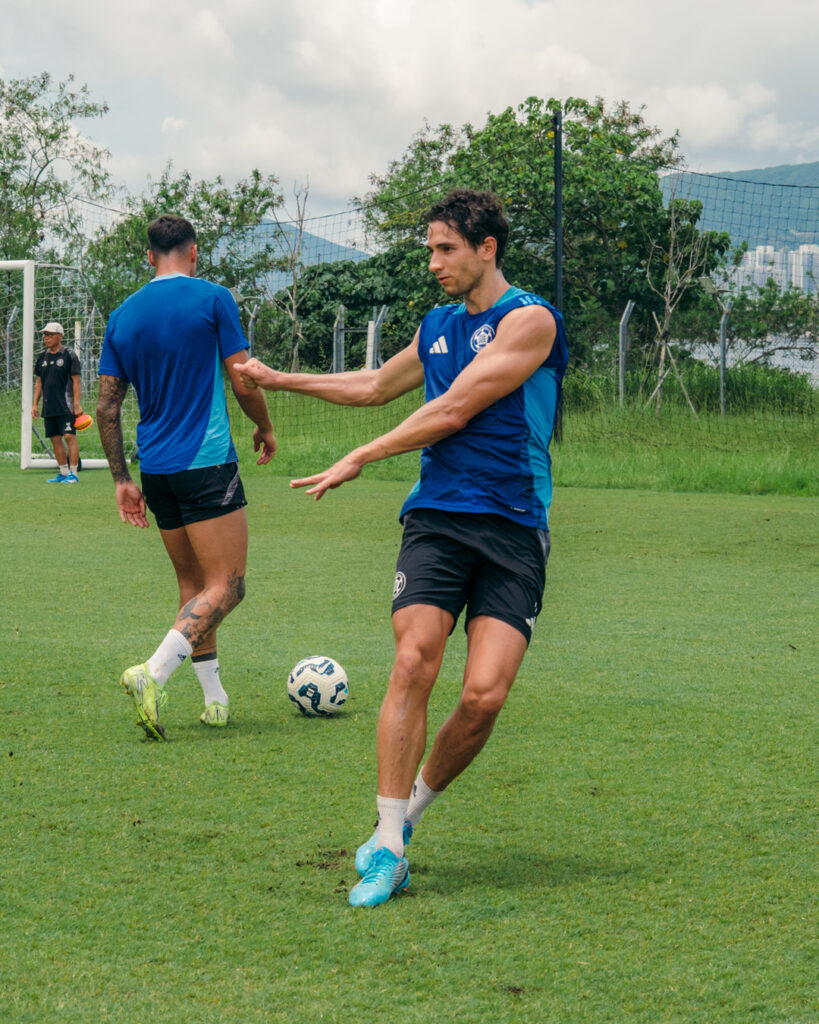
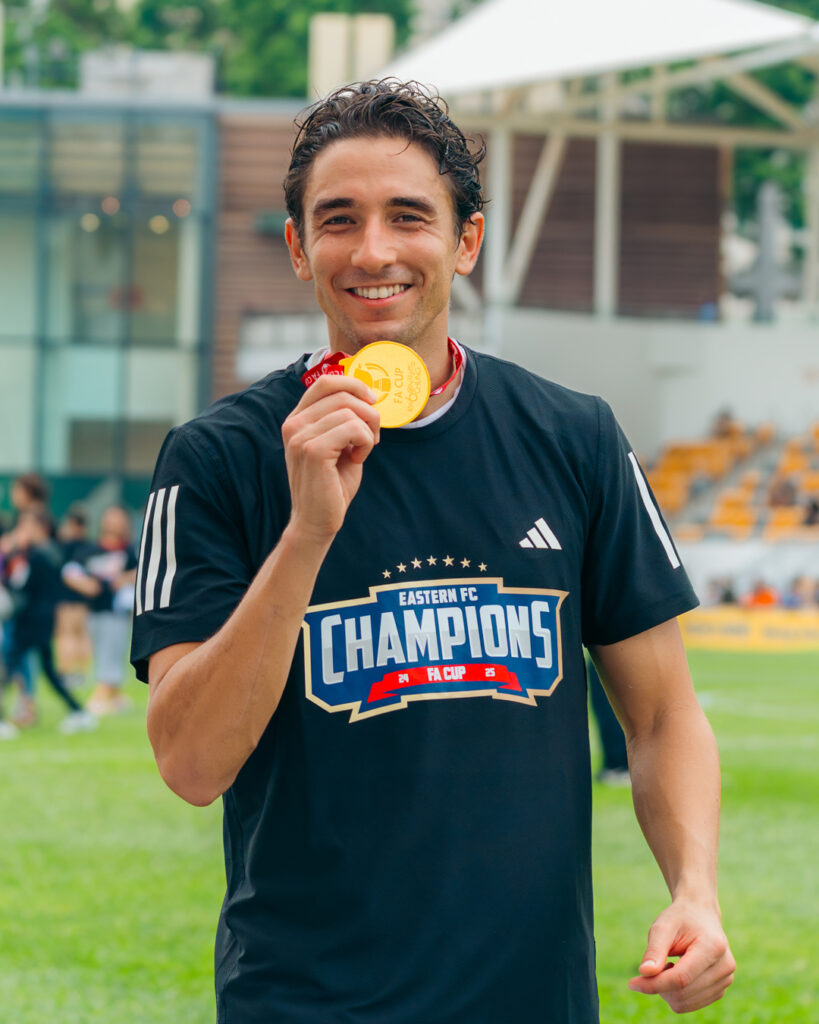
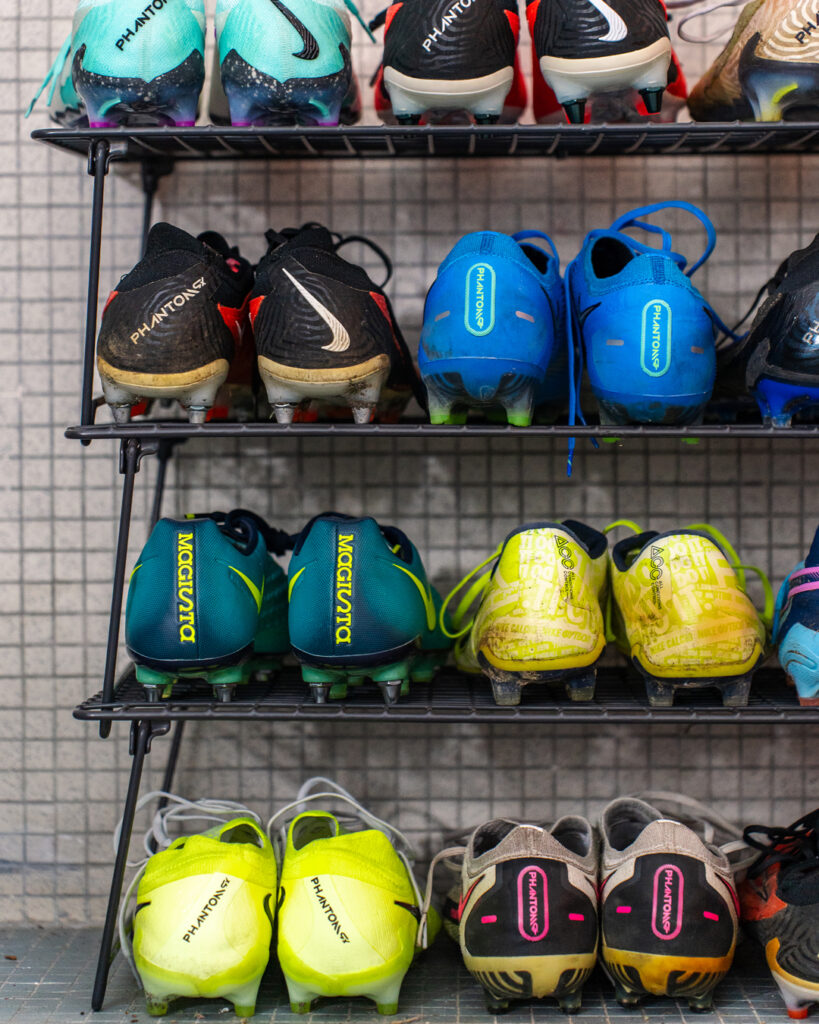
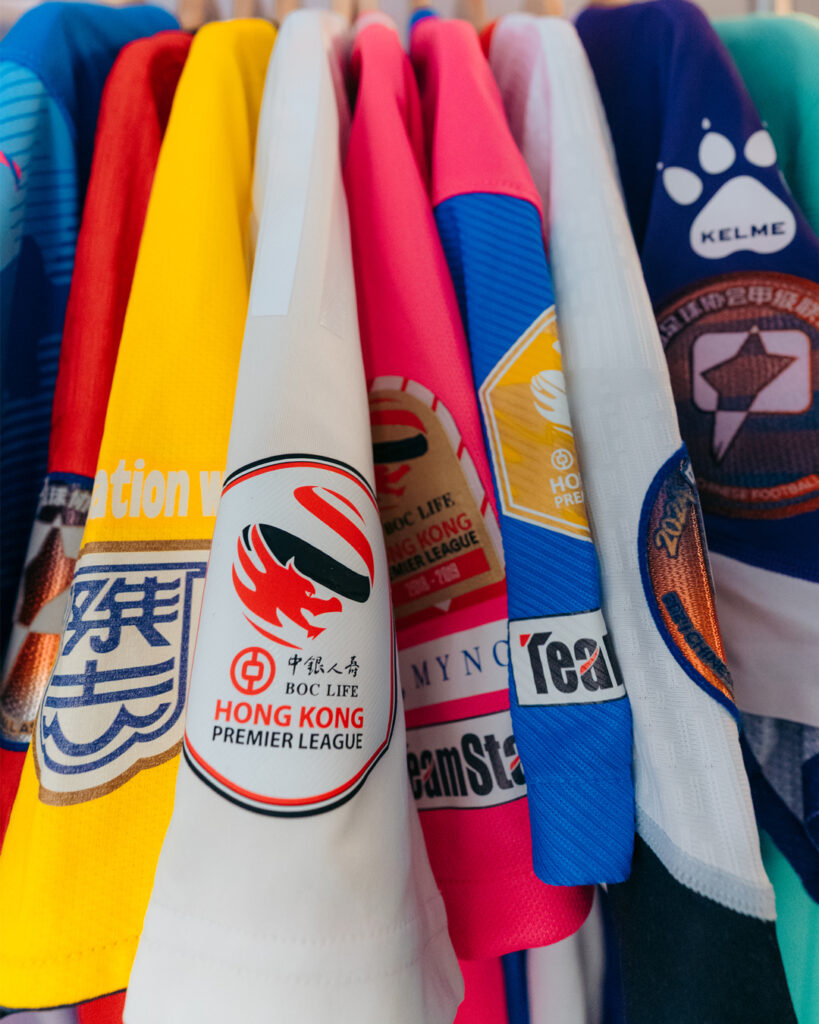
Meet Clement Benhaddouche – a professional footballer whose journey that began with uncertainty has since unfolded into a story of resilience, growth and plenty of full-circle moments. What started as a casual childhood activity transformed into a passion that’s taken him across borders and back again from Hong Kong’s playground courts to youth academies and university in the United States, and now to the international stage with the Hong Kong National Team.
Through every chapter – from formative friendships to injuries, setbacks, league titles, and national pride – Clem has remained driven by the pursuit of progress toward his next goals.
His story is about the quiet resilience and comeback, the deep-rooted friendships that began over a shared love of the game, the full circle moments of training in the shadows of Hong Kong stadium as a boy, only to return years later as a champion. His story shows how far belief, determination and community can take you, and how the smallest beginnings can lead to extraordinary things.
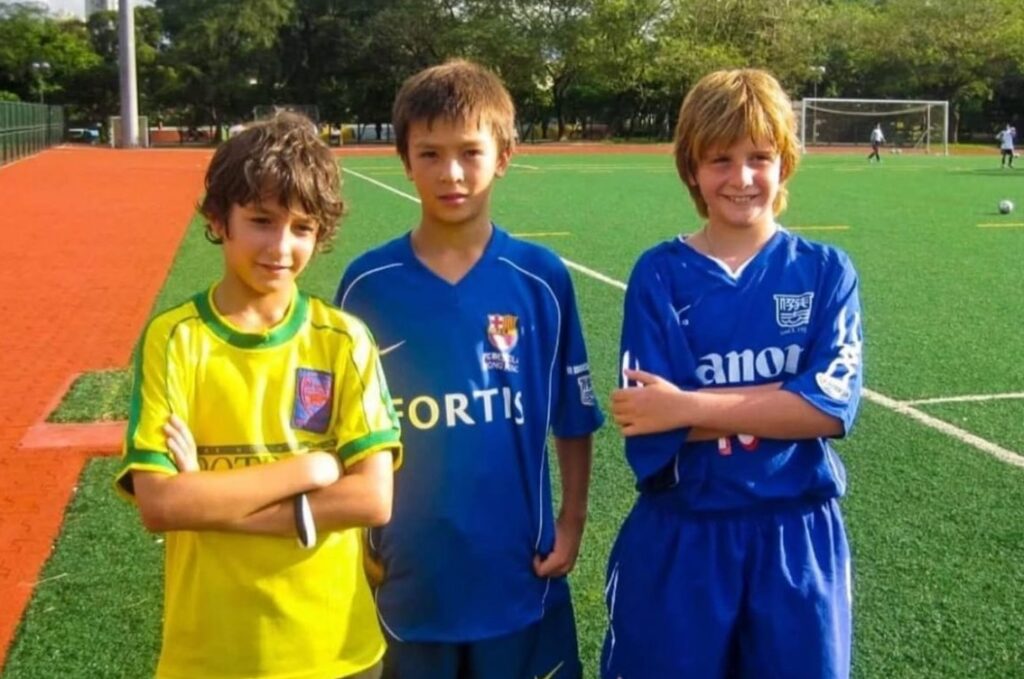
When did you first start playing football? I first played when I was five – my mom put me in a football class, and I hated it. I hated running. I hated training in the heat, and I didn’t really have friends. I was the smallest kid in the group and it was not really my thing until I met a couple friends, maybe around six, seven years old, and we all grew up playing for the same team for a few years. That’s when I realized I started to enjoy it.
What exactly did you start enjoying about football? I like the competitive aspect, the realization that you can get better with hard work. I also like being in a team environment with a good coach, it makes you feel like you are a part of something bigger than yourself.
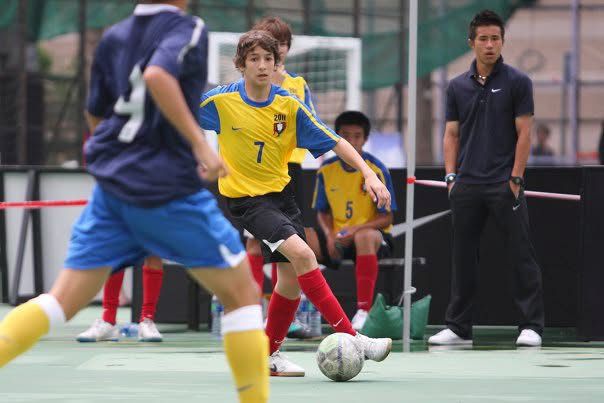
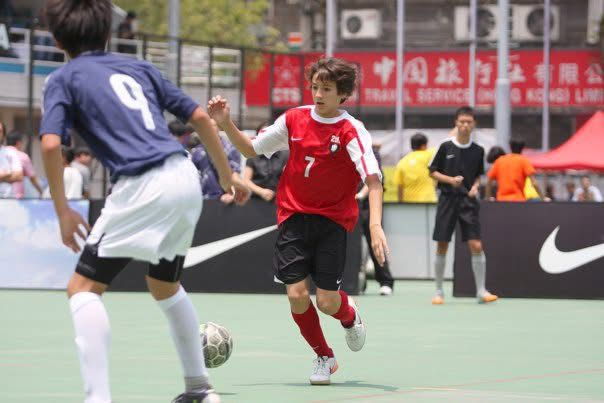
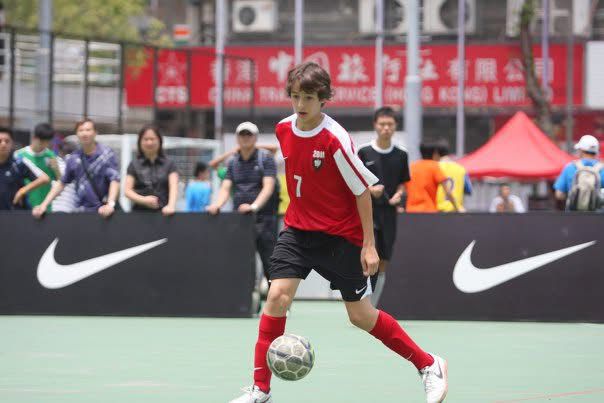
What was it like playing football in Hong Kong as a kid? Hong Kong is very small, so it’s easy to start getting competitive with people, and it pushes you to want to win. There’s tons of different tournaments from 5-a-side hardcourt tournaments in the middle of these playgrounds where you usually have uncles playing, 3-a-side cage matches in mall atriums, and then also the more traditional 7-a-side on grass and turf pitches. Even as an eight, nine, ten year old, you’re exposed to a lot of different styles of football. You get to travel a bit across Southeast Asia and play against different teams, which was also cool. A bit of everything.
When did you start getting more competitive? Around 11 or 12 is when it starts getting a bit more serious. Professional teams have programs here that you’ll go on trials for, and then you’ll enter an academy set up around 12 or 13. Then eventually I made a move to the US when I was 15/16. I’d done a couple of trials in Europe, but it’s difficult to balance football and education there, and the odds of making it there are slim to none. My parents were also really focused on education, so the US was the right next step for me because it provided a competitive education and football environment at the same time.
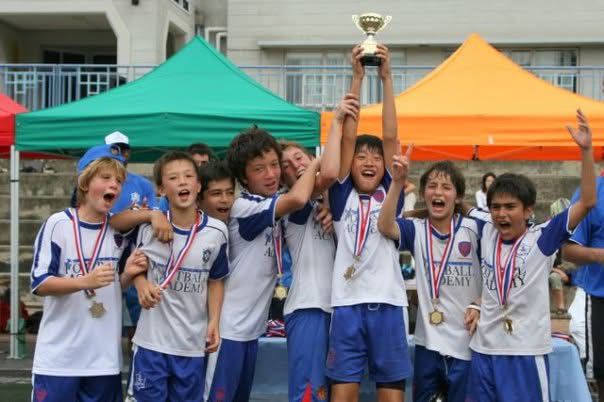
Any special memories from your upbringing in football here in Hong Kong? What stuck with me from my childhood is that I had the privilege with Hong Kong being such a small place, to still be close friends with people that I grew up playing with. I was lucky to make lifelong connections by just kicking a ball around which shows how powerful sports can be. We share a lot of memories, and there’s also the special aspect of meeting people from different backgrounds and sharing experiences that maybe you wouldn’t otherwise.
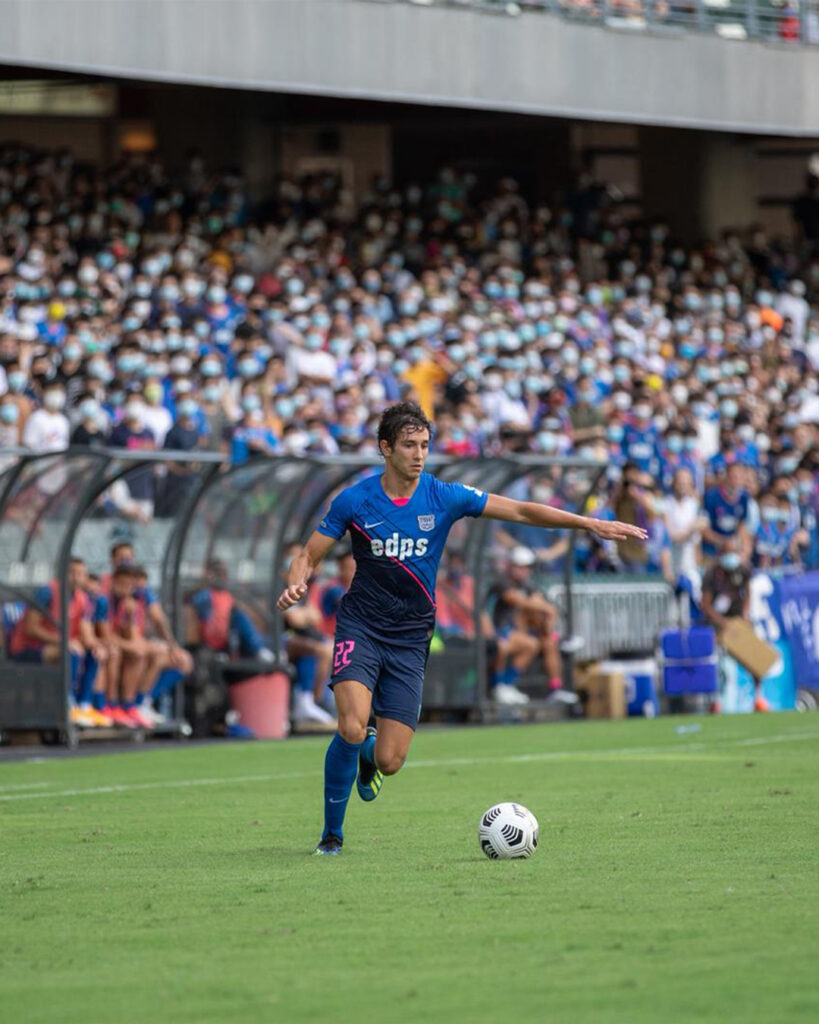
What was it like starting to play for Kitchee’s first team? My debut for Kitchee is definitely one the highlights of my career. Growing up playing for their academy, we always used to go to the stadium and watch first team games, so it was always a goal for academy players to eventually make it up to the professional setup. I ended up being a part of the first team for 4.5 seasons and won everything there was to win in Hong Kong.
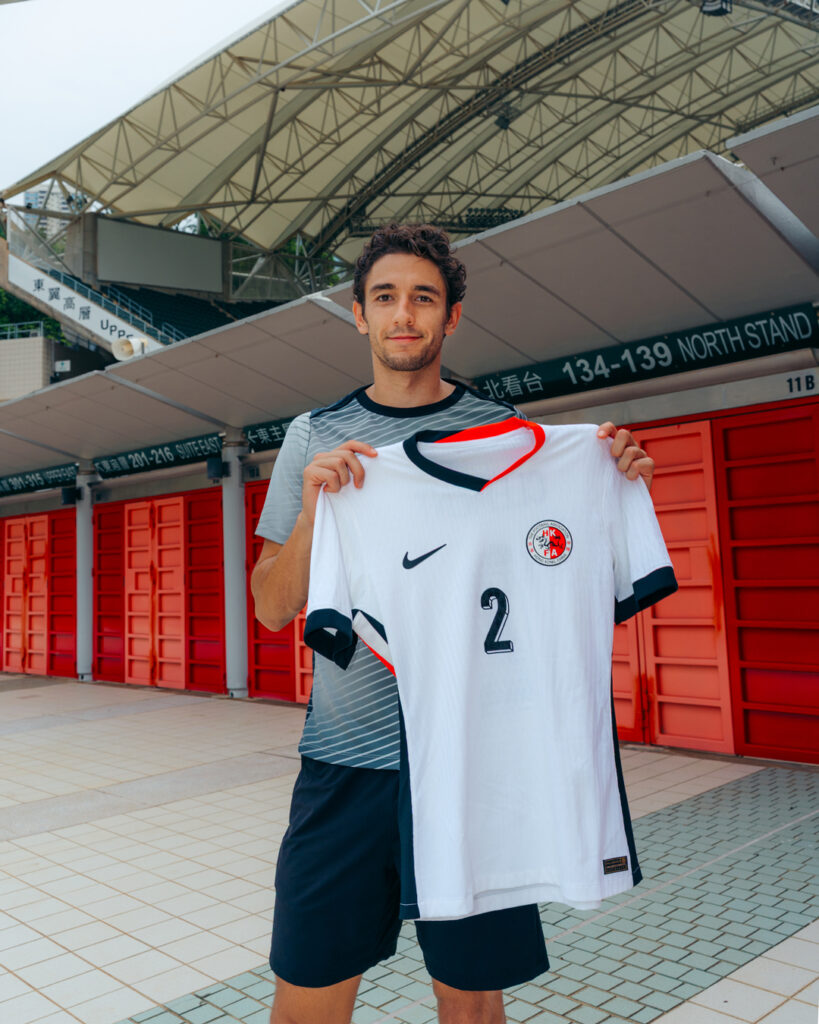
How did that compare to get your first official Hong Kong cap? In football, there aren’t many achievements that get better than representing your home at the international level. I think it’s difficult to compare the Kitchee debut with the Hong Kong debut, but both of those achievements hold a special part inside me. It’s something I’ve always dreamed of and aimed for. There were a lot of obstacles along the way but I hope that with more hard work it can be the first of many caps.
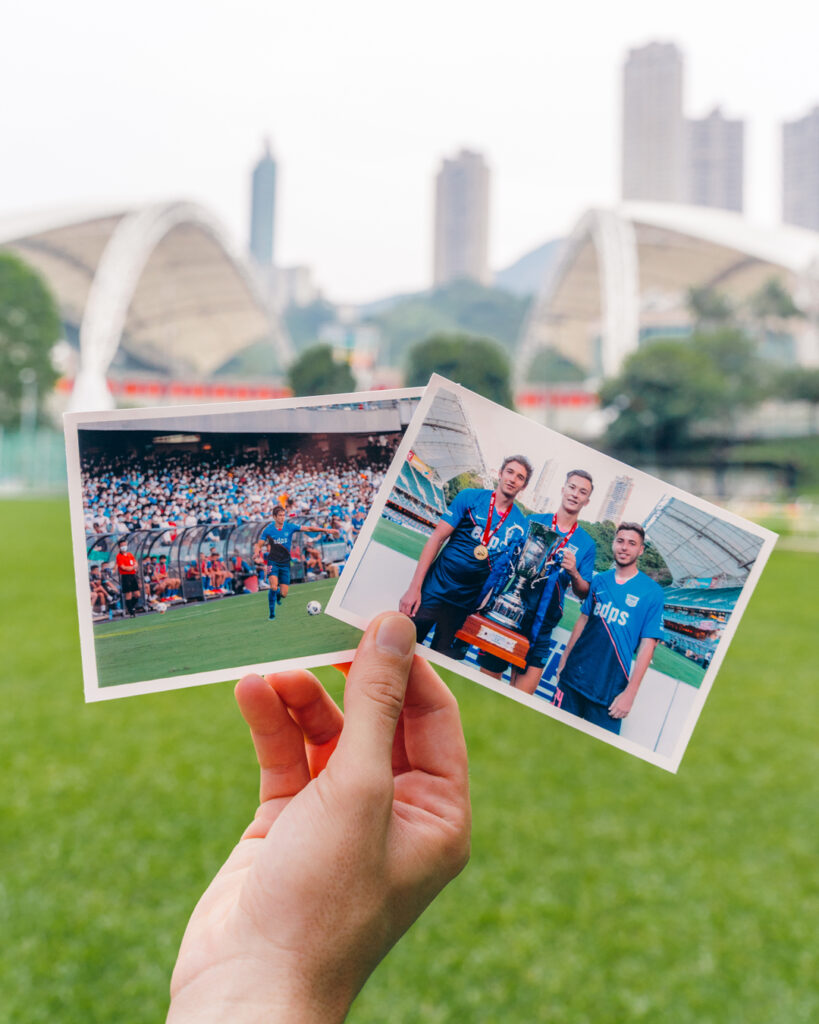
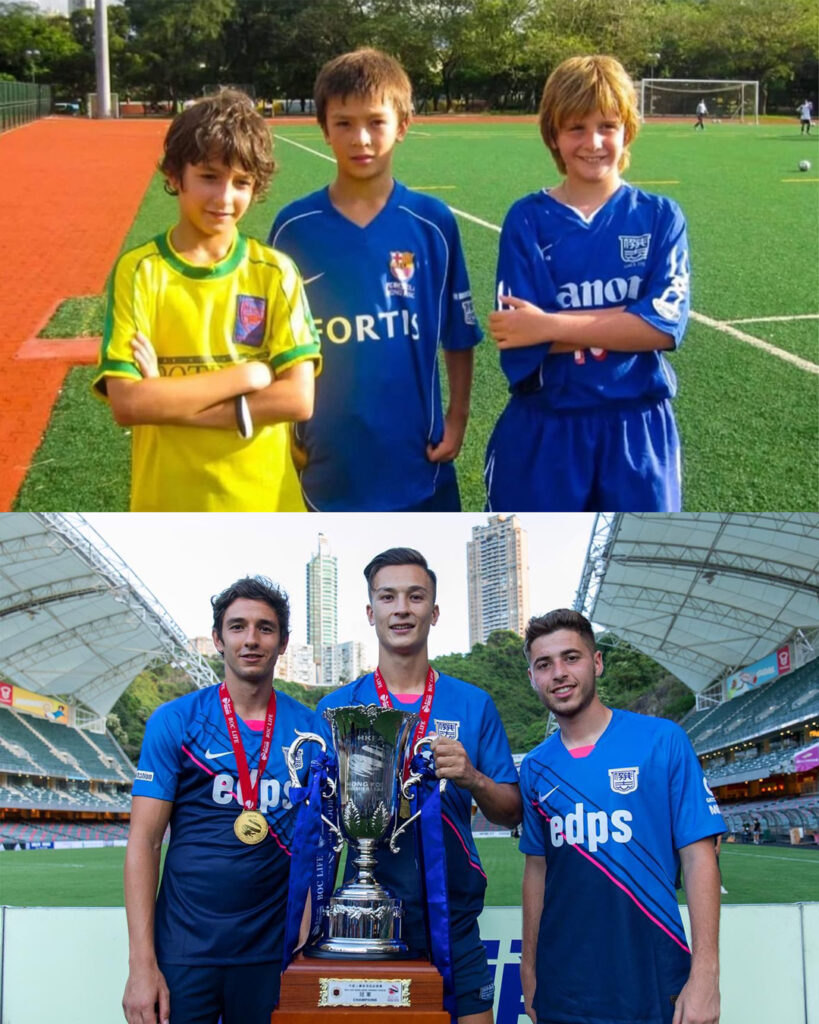
What is one of your best memories on the pitch, where you feel like you made it? When we won the HK league on the last day of the season, four years ago at Hong Kong stadium for my boyhood team Kitchee. There was a packed crowd, and the backstory behind being there really made it for me. I grew up training at IRC from about 6 to 12 years old, which is this little field right across from Hong Kong stadium. Every practice I’d just glance over, knowing that it was the goal to play there one day. So winning the league with my boyhood team, in front of this big crowd at Hong Kong stadium, it was this full circle moment where for the first time I was like, I made it.
What keeps you going in football? The constant pursuit for improvement, to prove to myself that I can become a better player with each session and match that comes my way. Putting the hours in to get to where I want to be is something that keeps making me wanting to show up daily and work hard, because I still have a lot of goals I want to accomplish in my playing career. It’s not always easy to have fun every day, but you know that if you do put in the work, you are going to get better, even though some results might take a bit longer to see than you might expect.
What’s it been like turning passion into a career? Some days it feels like a job, but most days it doesn’t. It can be tricky at times when your passion is your career, the highs and lows are intense because you are emotionally attached to your craft and your job.
Something like getting injured for instance – it takes your job away from you for a prolonged period of time. You feel like your life is on a pause in a way, because you can’t really do what you’re supposed to be doing. But then, when you’re playing in front of thousands of people, winning trophies and knowing that you’ve contributed to a win, that’s when you fulfilled and feel this euphoria.
I think it’s important to have balance outside of football and to be around people that are in different industries, so that you don’t get warped into this alternative reality, which this job can be sometimes. But It’s a nice to say that you are able to make a living from a dream you had as a kid.
When did you realize you needed more of a balance? I always had that balance starting out in school then college because you’d go to training and then class, and always had a bit of a social life. Once it became my job, I think it became more apparent how important it was to maintain that balance. When I moved to China, it was just for my career. I didn’t really have friends or much going on outside football, and that’s when it can mentally affect you. If you have a good game then that next week is good, whereas if you have an injury or a bad game or you don’t play that week, then it can kind of loom on you, and it’s easy to spiral into negativity when you don’t have things around you to help switch off from that aspect of your life. So I think it’s important in these kinds of moments to have these outlets whether it’s seeing friends, family, or developing ideas for what’s next on a personal level.
Have you had any setbacks, and how have you handled them? Too many to count! A lot of people are going to tell you, you can’t make it from a very young age. I was very small growing up, so that was already a disadvantage at the start, but from that, I managed to adapt my game and develop different strengths that I might not have otherwise.
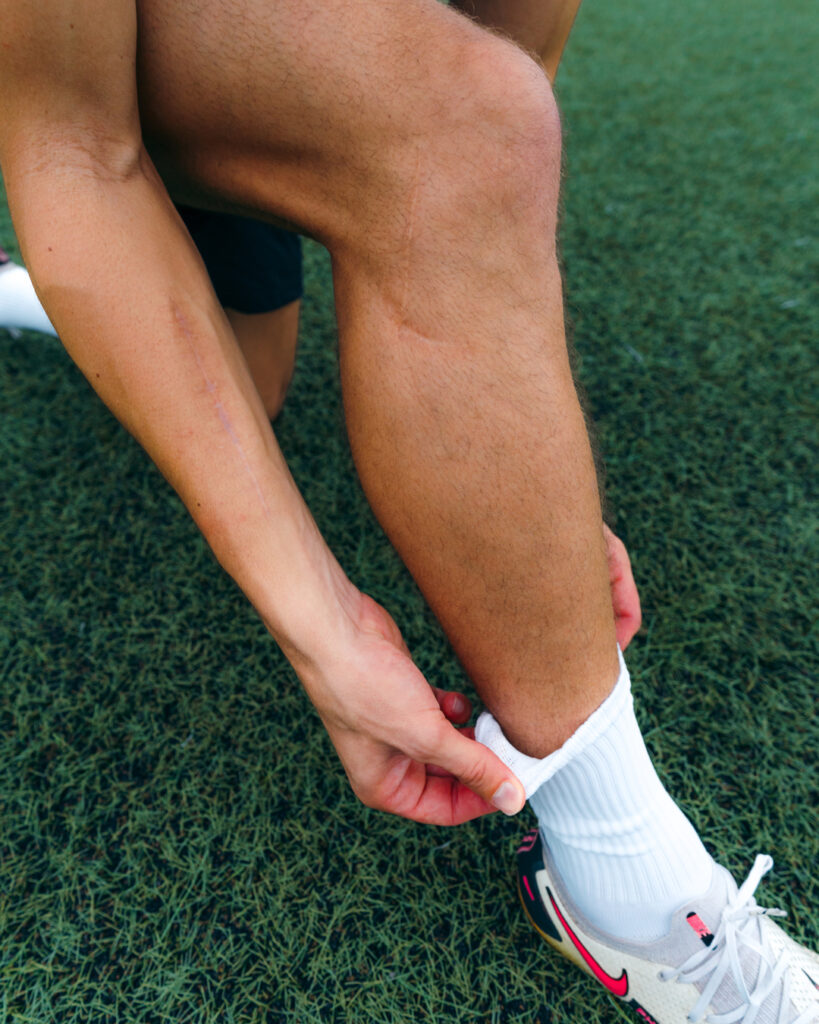
I think once my professional career started, the biggest setbacks, I would have to say, were injuries. I had a bad knee injury a few years ago, and was told I might never walk properly again, but at that moment in time I kept telling myself that whenever my career ended, I wanted it to be on my own terms and not because of external factors. I think that’s just what kept me going; I want to end my career when I say it’s over, not when someone tells me I can’t play anymore.
What are some things outside playing and training that you do for this that people may not realize? One thing I always like to do is rewatch my game and see what I’ve done well, and what I need to improve on. What people see in the stands is very different from what we see on the pitch so it helps to improve my understanding of the game. I usually go a couple days after the game to a cafe and review the game, write a few notes on details I want to focus on and keep in mind for the upcoming week.
Then usually a day or two before our game when start talking about it in training, I’ll go and watch the team we’re playing, and the players I’ll be up against 1v1 to see what their strengths and weaknesses are, and how I can adjust my game for the upcoming weekend. Every team has a different system, and analyzing these little details can be the 1% difference that can decide whether you win, tie, or lose a game.
Can you explain some of the differences of playing in us, Hong Kong and China? Even though I was in the US was I was younger, I would say the US is a lot more physically demanding than Asia in general. Just from the athletic perspective, people are bigger, stronger, faster, and the speed of the game is a lot more intense than in Hong Kong and China. While I was over there, I think I was more technically sound than the average American player, which is something I learned in Hong Kong. Because the weather is very hot, the conditions aren’t always great, and there’s limited space being in the city, they focus a lot more on technique. And China is a bit of a mix between the two in the sense that football there is a bit more physically demanding than Hong Kong, but still a bit less than the US.
In terms of diversity, Hong Kong’s really unique with it’s foreigner quota rules to have a lot more teammates from different countries. It makes for a good mixing pot of people from all over, and you’re going to hear easily 5 or 6 different languages in a training session which speaks to Hong Kong as an international city in itself. Also, there’s a very good team atmosphere here compared to the teams I’ve played for in China, where I’d say there’s a bit more of a competitive mindset going on.
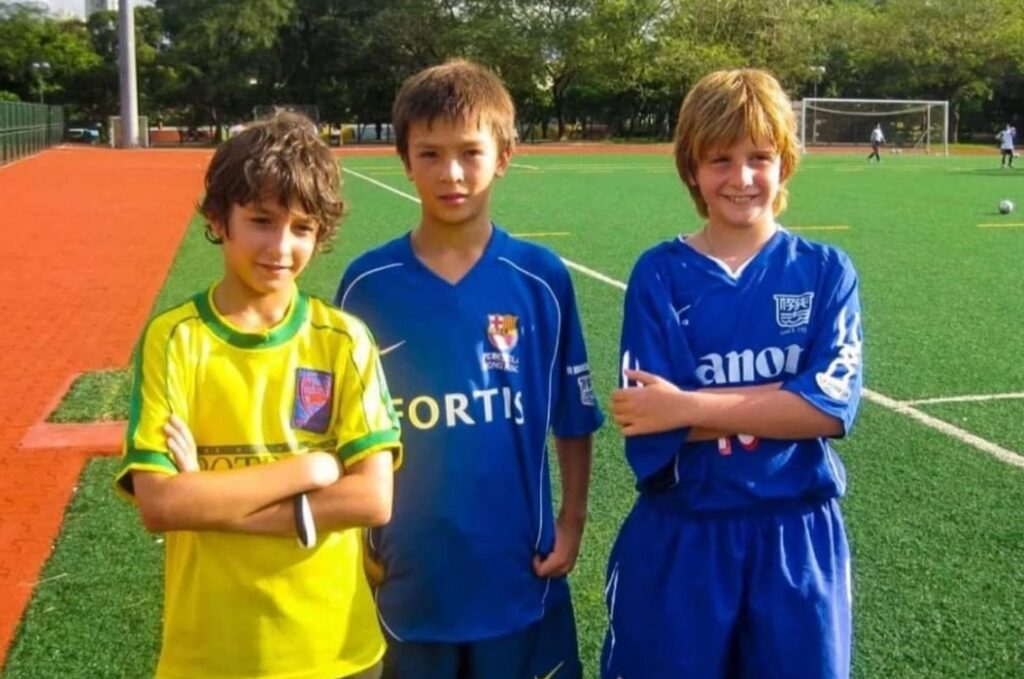
Who would you say is an important figure in your football career? My friends Antoine and Matt. We grew up playing together from the age of 4-5 years old until our teens, and I’d say our friendship motivated me to pursue football seriously. We all went to different schools, but would still meet up on weekdays to kick a ball around even when we weren’t training with our team. Antoine left young to pursue a career in Europe, but Matt and I went to the US together to boarding school. We played in different universities, but then both came back to Hong Kong and started playing professionally at around the same time for Kitchee. Winning trophies and even sharing this time with him and other close friends at Kitchee was pretty special. It’s stuff that we always talked about when were kids, all we wanted to do was to play football professionally. People like him and Antoine were the reason why I kept going; we were indirectly pushing each other every day to make that dream come true.
So I think to be able to go from playing together as kids to all of this and then recently getting called up to the national team together is this amazing full circle moment in a way. And I think there’s still a lot we can achieve together.
What are you looking forward to next in your career? The next challenge. I’ve just signed with a team in China again after a short stint back in Hong Kong. I wanted to go back because I still have a lot of goals I want to accomplish here. Now it’s up to me to put the work in and keep having the self-belief to get to where I want to be. I have more ambitious medium/long term goals but for now, I am looking to establish myself as a solid player for the team and to stay healthy of course.
Do you have any ideas what you want to do after you stop playing football? If I stayed in football at the moment and wasn’t a player, it would be like going to a bar and not drinking, not dancing, but like watching every other person do that. So I don’t know if I that’s something I would do, I think I’d have to make my peace with the player part of my life being behind me first. Right now on the side, I’m mentoring kids and helping them navigate the recruitment process and get scholarships to play in the US like I did. So that’s something I enjoy doing, trying to guide the next generation and inspiring them to fulfill their potential. I also have a business degree, and there’s definitely other things out there that interest me.
QUICK FIRE QUESTIONS
Favorite post game meal? Pizza reina – ham and mushroom pizza.
Favorite music? A lot of French music, French rap and old school French disco hits.
What’s a fun fact someone may not know about? I’ve had surgery on all four of my limbs.
Best piece of advice you’ve received about sports. Aim to have fun and get better every day.
If you could have dinner with any athlete, who would be? I’d say Kobe Bryant because of his work ethic, and all the setbacks he’s had. I really resonate with his story, and he’s someone I really looked up to when I was going through my knee injury.
What’s your pre-game rituals and traditions? I usually go outside to sit on the bench and visualize the game ahead, but I never step on the field until it’s time to go warmup.
Dream team to play for? Liverpool
Dream person to play with? My childhood idol, Steven Gerrard. On the pitch, he could do it all. He scored incredible goals that my friends and I would always try to recreate in the playground. He’s the player that made me love Liverpool and the player I looked up to growing up.
When did you first start playing football? I first played when I was five – my mom put me in a football class, and I hated it. I hated running. I hated training in the heat, and I didn’t really have friends. I was the smallest kid in the group and it was not really my thing until I met a couple friends, maybe around six, seven years old, and we all grew up playing for the same team for a few years. That’s when I realized I started to enjoy it.
What exactly did you start enjoying about football? I like the competitive aspect, the realization that you can get better with hard work. I also like being in a team environment with a good coach, it makes you feel like you are a part of something bigger than yourself.
What was it like playing football in Hong Kong as a kid? Hong Kong is very small, so it’s easy to start getting competitive with people, and it pushes you to want to win. There’s tons of different tournaments from 5-a-side hardcourt tournaments in the middle of these playgrounds where you usually have uncles playing, 3-a-side cage matches in mall atriums, and then also the more traditional 7-a-side on grass and turf pitches. Even as an eight, nine, ten year old, you’re exposed to a lot of different styles of football. You get to travel a bit across Southeast Asia and play against different teams, which was also cool. A bit of everything.
When did you start getting more competitive? Around 11 or 12 is when it starts getting a bit more serious. Professional teams have programs here that you’ll go on trials for, and then you’ll enter an academy set up around 12 or 13. Then eventually I made a move to the US when I was 15/16. I’d done a couple of trials in Europe, but it’s difficult to balance football and education there, and the odds of making it there are slim to none. My parents were also really focused on education, so the US was the right next step for me because it provided a competitive education and football environment at the same time.
Any special memories from your upbringing in football here in Hong Kong? What stuck with me from my childhood is that I had the privilege with Hong Kong being such a small place, to still be close friends with people that I grew up playing with. I was lucky to make lifelong connections by just kicking a ball around which shows how powerful sports can be. We share a lot of memories, and there’s also the special aspect of meeting people from different backgrounds and sharing experiences that maybe you wouldn’t otherwise.
What was it like starting to play for Kitchee’s first team? My debut for Kitchee is definitely one the highlights of my career. Growing up playing for their academy, we always used to go to the stadium and watch first team games, so it was always a goal for academy players to eventually make it up to the professional setup. I ended up being a part of the first team for 4.5 seasons and won everything there was to win in Hong Kong.
How did that compare to get your first official Hong Kong cap? In football, there aren’t many achievements that get better than representing your home at the international level. I think it’s difficult to compare the Kitchee debut with the Hong Kong debut, but both of those achievements hold a special part inside me. It’s something I’ve always dreamed of and aimed for. There were a lot of obstacles along the way but I hope that with more hard work it can be the first of many caps.
What is one of your best memories on the pitch, where you feel like you made it? When we won the HK league on the last day of the season, four years ago at Hong Kong stadium for my boyhood team Kitchee. There was a packed crowd, and the backstory behind being there really made it for me. I grew up training at IRC from about 6 to 12 years old, which is this little field right across from Hong Kong stadium. Every practice I’d just glance over, knowing that it was the goal to play there one day. So winning the league with my boyhood team, in front of this big crowd at Hong Kong stadium, it was this full circle moment where for the first time I was like, I made it.
What keeps you going in football? The constant pursuit for improvement, to prove to myself that I can become a better player with each session and match that comes my way. Putting the hours in to get to where I want to be is something that keeps making me wanting to show up daily and work hard, because I still have a lot of goals I want to accomplish in my playing career. It’s not always easy to have fun every day, but you know that if you do put in the work, you are going to get better, even though some results might take a bit longer to see than you might expect.
What’s it been like turning passion into a career? Some days it feels like a job, but most days it doesn’t. It can be tricky at times when your passion is your career, the highs and lows are intense because you are emotionally attached to your craft and your job.
Something like getting injured for instance – it takes your job away from you for a prolonged period of time. You feel like your life is on a pause in a way, because you can’t really do what you’re supposed to be doing. But then, when you’re playing in front of thousands of people, winning trophies and knowing that you’ve contributed to a win, that’s when you fulfilled and feel this euphoria.
I think it’s important to have balance outside of football and to be around people that are in different industries, so that you don’t get warped into this alternative reality, which this job can be sometimes. But It’s a nice to say that you are able to make a living from a dream you had as a kid.
When did you realize you needed more of a balance? I always had that balance starting out in school then college because you’d go to training and then class, and always had a bit of a social life. Once it became my job, I think it became more apparent how important it was to maintain that balance. When I moved to China, it was just for my career. I didn’t really have friends or much going on outside football, and that’s when it can mentally affect you. If you have a good game then that next week is good, whereas if you have an injury or a bad game or you don’t play that week, then it can kind of loom on you, and it’s easy to spiral into negativity when you don’t have things around you to help switch off from that aspect of your life. So I think it’s important in these kinds of moments to have these outlets whether it’s seeing friends, family, or developing ideas for what’s next on a personal level.
Have you had any setbacks, and how have you handled them? Too many to count! A lot of people are going to tell you, you can’t make it from a very young age. I was very small growing up, so that was already a disadvantage at the start, but from that, I managed to adapt my game and develop different strengths that I might not have otherwise.
I think once my professional career started, the biggest setbacks, I would have to say, were injuries. I had a bad knee injury a few years ago, and was told I might never walk properly again, but at that moment in time I kept telling myself that whenever my career ended, I wanted it to be on my own terms and not because of external factors. I think that’s just what kept me going; I want to end my career when I say it’s over, not when someone tells me I can’t play anymore.
What are some things outside playing and training that you do for this that people may not realize? One thing I always like to do is rewatch my game and see what I’ve done well, and what I need to improve on. What people see in the stands is very different from what we see on the pitch so it helps to improve my understanding of the game. I usually go a couple days after the game to a cafe and review the game, write a few notes on details I want to focus on and keep in mind for the upcoming week.
Then usually a day or two before our game when start talking about it in training, I’ll go and watch the team we’re playing, and the players I’ll be up against 1v1 to see what their strengths and weaknesses are, and how I can adjust my game for the upcoming weekend. Every team has a different system, and analyzing these little details can be the 1% difference that can decide whether you win, tie, or lose a game.
Can you explain some of the differences of playing in us, Hong Kong and China? Even though I was in the US was I was younger, I would say the US is a lot more physically demanding than Asia in general. Just from the athletic perspective, people are bigger, stronger, faster, and the speed of the game is a lot more intense than in Hong Kong and China. While I was over there, I think I was more technically sound than the average American player, which is something I learned in Hong Kong. Because the weather is very hot, the conditions aren’t always great, and there’s limited space being in the city, they focus a lot more on technique. And China is a bit of a mix between the two in the sense that football there is a bit more physically demanding than Hong Kong, but still a bit less than the US.
In terms of diversity, Hong Kong’s really unique with it’s foreigner quota rules to have a lot more teammates from different countries. It makes for a good mixing pot of people from all over, and you’re going to hear easily 5 or 6 different languages in a training session which speaks to Hong Kong as an international city in itself. Also, there’s a very good team atmosphere here compared to the teams I’ve played for in China, where I’d say there’s a bit more of a competitive mindset going on.
Who would you say is an important figure in your football career? My friends Antoine and Matt. We grew up playing together from the age of 4-5 years old until our teens, and I’d say our friendship motivated me to pursue football seriously. We all went to different schools, but would still meet up on weekdays to kick a ball around even when we weren’t training with our team. Antoine left young to pursue a career in Europe, but Matt and I went to the US together to boarding school. We played in different universities, but then both came back to Hong Kong and started playing professionally at around the same time for Kitchee. Winning trophies and even sharing this time with him and other close friends at Kitchee was pretty special. It’s stuff that we always talked about when were kids, all we wanted to do was to play football professionally. People like him and Antoine were the reason why I kept going; we were indirectly pushing each other every day to make that dream come true.
So I think to be able to go from playing together as kids to all of this and then recently getting called up to the national team together is this amazing full circle moment in a way. And I think there’s still a lot we can achieve together.
What are you looking forward to next in your career? The next challenge. I’ve just signed with a team in China again after a short stint back in Hong Kong. I wanted to go back because I still have a lot of goals I want to accomplish here. Now it’s up to me to put the work in and keep having the self-belief to get to where I want to be. I have more ambitious medium/long term goals but for now, I am looking to establish myself as a solid player for the team and to stay healthy of course.
Do you have any ideas what you want to do after you stop playing football? If I stayed in football at the moment and wasn’t a player, it would be like going to a bar and not drinking, not dancing, but like watching every other person do that. So I don’t know if I that’s something I would do, I think I’d have to make my peace with the player part of my life being behind me first. Right now on the side, I’m mentoring kids and helping them navigate the recruitment process and get scholarships to play in the US like I did. So that’s something I enjoy doing, trying to guide the next generation and inspiring them to fulfill their potential. I also have a business degree, and there’s definitely other things out there that interest me.
QUICK FIRE QUESTIONS
Favorite post game meal? Pizza reina – ham and mushroom pizza.
Favorite music? A lot of French music, French rap and old school French disco hits.
What’s a fun fact someone may not know about? I’ve had surgery on all four of my limbs.
Best piece of advice you’ve received about sports. Aim to have fun and get better every day.
If you could have dinner with any athlete, who would be?
I’d say Kobe Bryant because of his work ethic, and all the setbacks he’s had. I really resonate with his story, and he’s someone I really looked up to when I was going through my knee injury.
What’s your pre-game rituals and traditions? I usually go outside to sit on the bench and visualize the game ahead, but I never step on the field until it’s time to go warmup.
Dream team to play for? Liverpool
Dream person to play with? My childhood idol, Steven Gerrard. On the pitch, he could do it all. He scored incredible goals that my friends and I would always try to recreate in the playground. He’s the player that made me love Liverpool and the player I looked up to growing up.